

Imagine transforming a tiny patch of earth into a bustling vegetable paradise. Square foot gardening makes that dream a reality, allowing anyone to grow fresh produce in limited spaces. With just a few simple guidelines, even the most novice gardener can cultivate a vibrant garden that’s as productive as it is fun.
Square Foot Gardening vegetable chart
Square foot gardening optimizes small spaces for growing vegetables. It enables efficient use of limited areas by dividing these spaces into square foot sections. Each section accommodates specific vegetable types, ensuring higher yields in compact garden plots.
Gardeners place plants based on the recommended spacing for each vegetable. This method simplifies planning and maximizes production. Plants thrive with proper light, water, and nutrients, making square foot gardening practical and effective.
Many vegetables adapt well to this structure. Carrots, radishes, and lettuce fit nicely into small sections, while larger crops like tomatoes and peppers require more space. Following specific guidelines enhances garden performance.
Plant rotations and companion planting become easier in square foot gardens. Companion planting helps control pests naturally while promoting growth among compatible plants. Farmers gain a deeper understanding of crop interactions, leading to healthier gardens.
Gardeners commonly utilize raised beds in this approach. These beds improve drainage and soil quality, promoting healthy root systems. Maintaining soil health becomes crucial for sustainable gardening practices.
Many resources provide square foot gardening vegetable charts. These charts inform gardeners about the best plant combinations and spacing recommendations. Utilizing such resources streamlines gardening efforts and increases overall productivity.
Square foot gardening remains an accessible option for creating productive gardens. Novices find success through simple practices that yield fresh produce. Adopting this method contributes to a more sustainable and enjoyable gardening experience.
Benefits of Square Foot Gardening
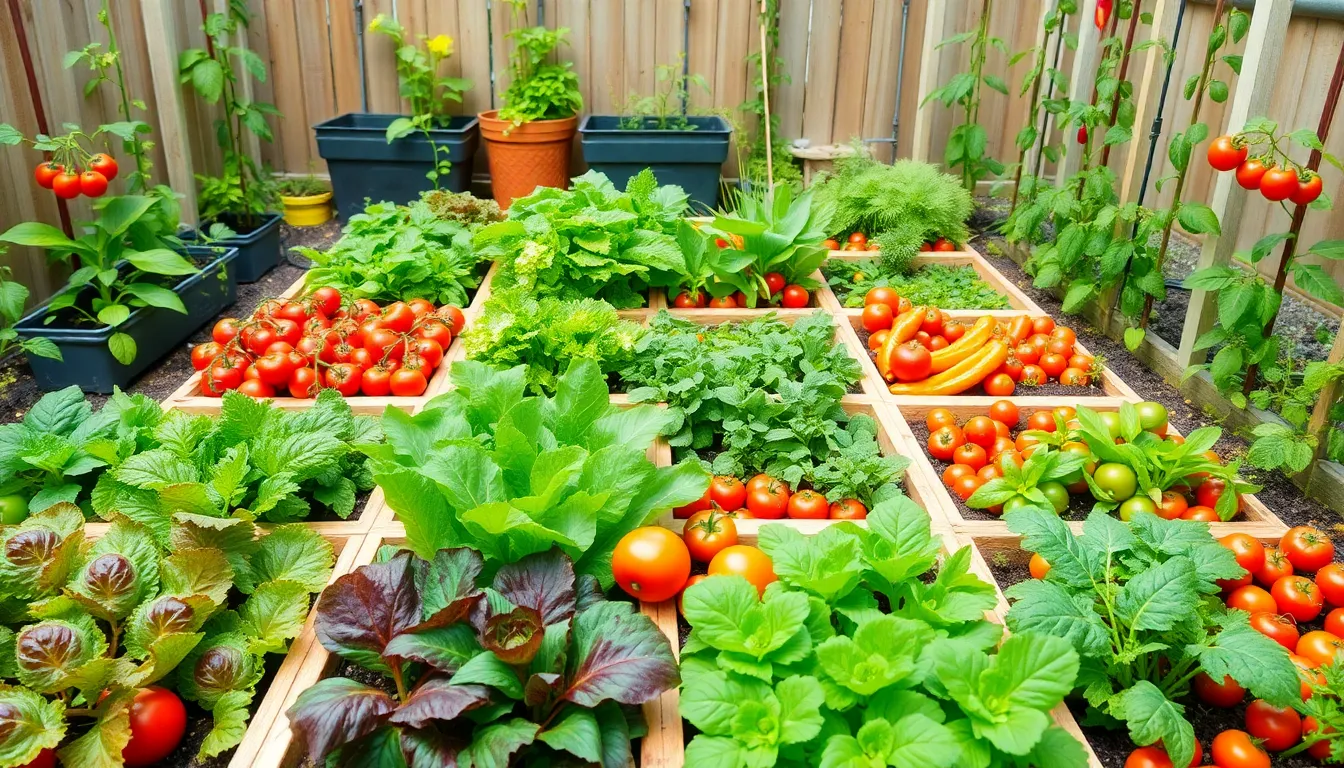
Square foot gardening offers several advantages, particularly for those with limited gardening space. This method maximizes productivity while maintaining simplicity and ease of maintenance.
Space Efficiency
Space efficiency stands out as a significant benefit of square foot gardening. Gardeners effectively utilize small areas by dividing them into manageable squares. Each square accommodates specific crops, promoting organization and easy access. This setup allows individuals with backyards, patios, or balconies to grow a variety of vegetables without overcrowding. Vertical gardening techniques complement this space-saving approach. Using trellises or wall planters can further optimize the growing area. Reduced soil compaction occurs as gardeners focus their planting efforts, leading to better root development. Ultimately, this method enhances the overall gardening experience while fostering a productive environment.
Increased Yield
Increased yield proves essential in square foot gardening. Maximizing crop potential occurs through strategic plant placement and spacing. Each square foot can support multiple plants, depending on their size. For instance, four lettuce plants fit comfortably in a single square, while only one tomato plant occupies that same space. This efficiency translates into more produce per square foot compared to traditional gardening methods. Utilizing intensive planting techniques encourages healthier plants due to optimal light, water, and nutrient access. Crop rotation and companion planting further contribute to heightened yields, as compatible plants strengthen each other’s growth. Gardeners consistently achieve abundant harvests, making this approach appealing to both novices and experienced growers.
Understanding the Square Foot Gardening Vegetable Chart
Square foot gardening vegetable charts simplify planning and optimize growing conditions in small spaces. They provide clear guidelines on vegetable types and their respective planting arrangements.
Common Vegetables Included
Common vegetables found in square foot gardens include lettuce, carrots, radishes, and peppers. These crops thrive in confined areas due to their spacing requirements. Lettuce typically occupies one square foot per four plants, while carrots can fit 16 plants in the same space. For larger vegetables, like tomatoes and peppers, one plant per square foot optimizes growth. Green beans, another popular choice, can be planted at a density of nine plants per square foot. Knowing these specifics allows gardeners to maximize yield with thoughtful plant selection.
Ideal Planting Dimensions
Ideal planting dimensions depend on the vegetable type and its growth habits. Each square foot section accommodates a specific number of plants for optimal growth. Smaller crops require less space, while larger crops necessitate more room. For instance, radishes need four inches per plant, while zucchini typically requires three feet of space per plant. Following these dimensions ensures plants receive adequate light, water, and nutrients. Using the square foot gardening vegetable chart facilitates accurate planning and enhances overall garden productivity.
Tips for Using the Vegetable Chart
Utilizing the vegetable chart effectively enhances square foot gardening practices. Following specific guidelines optimizes yield and ensures plant health.
Companion Planting
Companion planting improves garden productivity and pest management. Certain vegetables, such as tomatoes and basil, thrive when grown together, as basil deters pests. Corn and beans benefit from their mutual association; beans fix nitrogen in the soil, enriching nutrients for corn. Including flowers like marigolds attracts pollinators and repels garden pests. Referencing the vegetable chart helps identify compatible plants. By strategically placing these companions within the designated squares, gardeners can create a thriving ecosystem that promotes overall health.
Seasonal Considerations
Seasonal variations significantly affect vegetable growth. Cool-season crops, like lettuce and peas, flourish in spring and fall, while warm-season vegetables, such as tomatoes and peppers, prefer summer months. Planting according to seasons enhances growth conditions. As indicated on the vegetable chart, staggering planting times leads to continuous harvests throughout the year. Understanding frost dates and local climate patterns aids in planning. Adjusting planting schedules to align with seasonal needs optimizes the garden’s productivity, ensuring a bountiful yield.
Conclusion
Square foot gardening offers a practical solution for maximizing small spaces while growing a variety of vegetables. By utilizing vegetable charts and understanding plant spacing, gardeners can create thriving ecosystems that yield abundant harvests. This method not only simplifies the gardening process but also promotes healthy soil and plant relationships through companion planting and crop rotation.
With its adaptability and efficiency, square foot gardening empowers both novice and experienced gardeners to cultivate fresh produce year-round. Embracing these techniques can lead to a more sustainable and rewarding gardening experience, making it an ideal choice for anyone looking to enhance their green thumb.